
In the rapidly evolving landscape of automation technology, the lines between digital processors and mechanical actors often blur. While they share a common ancestry in electronics and logic, understanding the difference between computers and robots is crucial for navigating the future of tech. Are they the same? Is a robot just a computer with legs? This comprehensive guide goes beyond the basics, exploring mechatronics engineering, artificial intelligence (AI), and the physical world interaction that sets these two technologies apart.
The Core Distinction: Brain vs. Body
To understand how are computers and robots different, we must look at their fundamental purpose. A computer is designed for data manipulation; it lives in a digital world. A robot is designed for physical world interaction; it lives in and changes our environment.
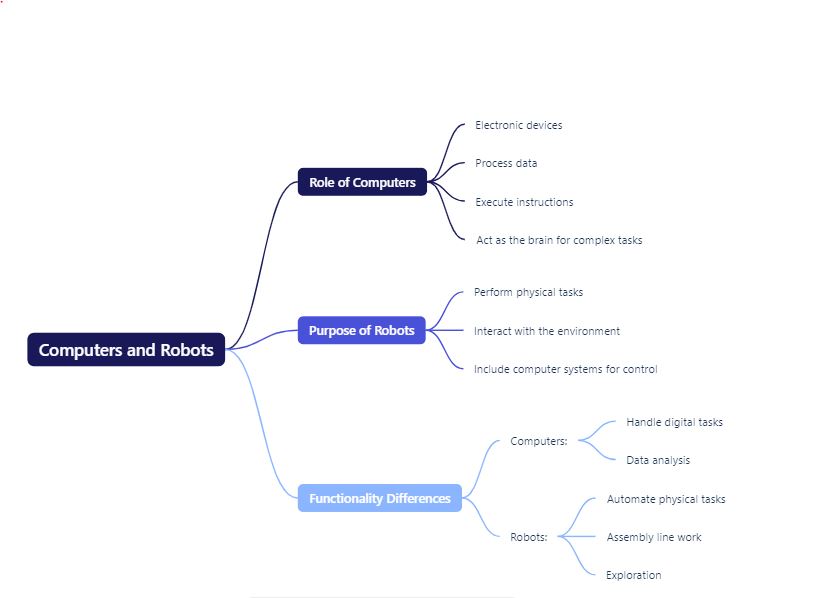
The main difference between a computer and a robot is physical agency. A computer is a programmable device that accepts data, processes it, and produces results (information). A robot is an autonomous or semi-autonomous machine capable of sensing its environment, computing a decision, and performing physical actions using actuators. Essentially, a robot is a computer with a body.
Difference Between Computer and Robot
If you need a simple explanation (difference between computers and robots):
- The Computer is like a brain in a jar. It can think, calculate, and dream up amazing things, but it cannot kick a ball or pick up a cup on its own.
- The Robot is like a body that has a brain inside it. Because it has arms (actuators) and eyes (sensors), it can see the cup, decide to pick it up, and physically move it.
1. Defining the Entities: Digital vs. Physical
To accurately dissect computer vs robot, we must define the boundaries of digital vs. physical entities.
What is a Computer?
A computer is a machine that processes data according to a set of instructions (software). Its primary domain is information technology systems. It excels at computational thinking breaking down problems into logic gates and algorithms.
- Input: Keyboards, mice, microphones (Data).
- Processing: CPU/GPU executes logic.
- Output: Screens, speakers, printers (Information).
Types of computers include supercomputers, mainframes, personal computers, and embedded computing devices found in appliances.
What is a Robot?
A robot is a reprogrammable, multifunctional manipulator designed to move material, parts, tools, or specialized devices through variable programmed motions. In modern terms, it is a machine that embodies robot intelligence to interact with the physical world.
- Input: Sensors (Cameras, Lidar, Thermometers).
- Processing: Embedded computing and control systems.
- Output: Actuators (Motors, Hydraulics, Pneumatics) resulting in robot locomotion or manipulation.
2. Hardware vs. Software Distinctions
The hardware vs. software distinctions in these machines highlight their divergent evolutionary paths.
The Computer’s Anatomy
Computers rely heavily on data processing units. The focus is on speed, memory, and throughput.
- Processor Functions: The CPU handles general logic, while the GPU handles parallel processing (crucial for graphics and AI).
- Storage: SSDs and RAM hold the digital state.
- Interface: Human-computer interaction (HCI) devices like touchscreens.
The Robot’s Anatomy (Mechatronics)
Robots require mechatronics engineering a blend of mechanical, electrical, and computer engineering. Robotic components include:
- Sensors: The eyes and ears that gather data from the environment.
- Actuators: The muscles that create movement.
- End-Effectors: The hands or tools (grippers, welders) that perform tasks.
- The Controller: The computer inside the robot that runs robotics programming.
3. Intelligence and Autonomy
A critical question is: Is a robot a computer? technically, yes most robots contain computers. However, a computer is not a robot. The differentiator is autonomous systems design.
The Spectrum of Autonomy
- Teleoperated: A human controls every move (e.g., surgical robots). The computer acts only as a relay.
- Semi-Autonomous: The robot performs sub-tasks (like keeping balance) while a human directs the general path.
- Fully Autonomous: utilizing autonomous decision-making, the robot navigates and acts without human intervention.
Robotics and AI Convergence
This is where machine learning transforms the field. Traditional robots followed strict code. Modern robots use artificial intelligence (AI) to adapt. Algorithms for robotics now allow machines to learn from their environment rather than just following a script. Research indicates that AI algorithms enable robots to learn and adapt to new environments through reinforcement learning.
4. Addressing Common Questions
To provide a high-ranking resource, we must address specific semantic queries.
What is the difference between a robot and a machine?
All robots are machines, but not all machines are robots. A toaster is a machine; it performs a physical task. However, it lacks sensors and actuators that create a feedback loop. It cannot sense that the toast is burning and decide to eject it early unless specifically programmed with a sensor at which point, it becomes a very simple robot. The key is reprogrammability and adaptability.
What is the difference between AI and robots?
- AI (Artificial Intelligence): This is the software or the mind. It is a branch of computer science principles capable of learning and problem solving. AI can exist purely on a server without a physical body.
- Robots: This is the hardware or the body.
Think of it this way: AI is the driver; the robot is the car. You can have a robot without AI (a pre-programmed factory arm), and you can have AI without a robot (ChatGPT).
What are the 3 D’s of robotics?
Robots are historically designed to replace humans in jobs that are:
- Dull: Repetitive tasks like assembly lines.
- Dirty: Mining, sewer inspection, or painting.
- Dangerous: Bomb disposal, space exploration, or nuclear cleanup.
Can a robot be afraid?
Currently, no. While computational intelligence can simulate emotions to improve HCI, robots do not experience biological fear. However, in cybernetics, we program avoidance behaviors that mimic fear such as a vacuum robot backing away from a ledge to preserve its existence.
5. The Role of CPU/GPU in Robotic Control
The role of CPU/GPU in robotic control is the bridge between the two worlds. In a standard computer, the CPU calculates data for a screen. In a robot, the CPU calculates kinematics (movement geometry) and dynamics (force).
- CPUs handle the high-level decision-making (Path planning: “Go to the kitchen”).
- GPUs are increasingly used for computer vision processing camera feeds to identify obstacles in milliseconds.
6. Types of Robots vs Types of Computers
Types of Computers:
- Personal Computers (PC): General purpose.
- Servers: Data handling.
- Microcontrollers: Simple, low-power chips for specific tasks.
Types of Robots:
- Industrial Robots: Fixed arms for manufacturing.
- Service Robots: Roombas, waiter bots.
- Humanoid Robots: Bipedal designs mimicking humans (e.g., Boston Dynamics’ Atlas).
- Swarm Robots: Many small robots working together.
Conclusion: The Convergence
The difference between computers and robots is becoming less about what they are and more about what they do. As embedded computing becomes more powerful, almost every machine is becoming a computer. When that machine gains the ability to physically act on the world through automation technology, it becomes a robot.
While computers process the data that drives our information age, robots serve as the bridge, translating that digital intelligence into physical action. As robotics and AI convergence accelerates, the distinction will continue to evolve, moving us toward a future where the digital and physical worlds are seamlessly intertwined.

Kaleem
My name is Kaleem and i am a computer science graduate with 5+ years of experience in Computer science, AI, tech, and web innovation. I founded ValleyAI.net to simplify AI, internet, and computer topics also focus on building useful utility tools. My clear, hands-on content is trusted by 5K+ monthly readers worldwide.